AI x Blockchain
AI + Crypto Trends: Infrastructure Questions That Matter
A grounded view of AI x blockchain through compute coordination, provenance, verification, incentives, and real user demand.

AI and blockchain overlap in a few practical areas: coordinating compute, recording provenance, managing incentives, and sharing resources. They do not automatically make each other more useful. A token does not make a model smarter, and an immutable ledger does not make a prediction more accurate. This post separates the real infrastructure work from the marketing, using the NIST AI Risk Management Framework as a grounding reference for what trustworthy AI systems actually need.
If you are new to how these systems fit together, our explainer on web3 infrastructure covers the node, consensus, and RPC layer that AI projects build on, and how to research DePIN projects shows how to evaluate the physical networks underneath many AI-crypto products.

Compute coordination
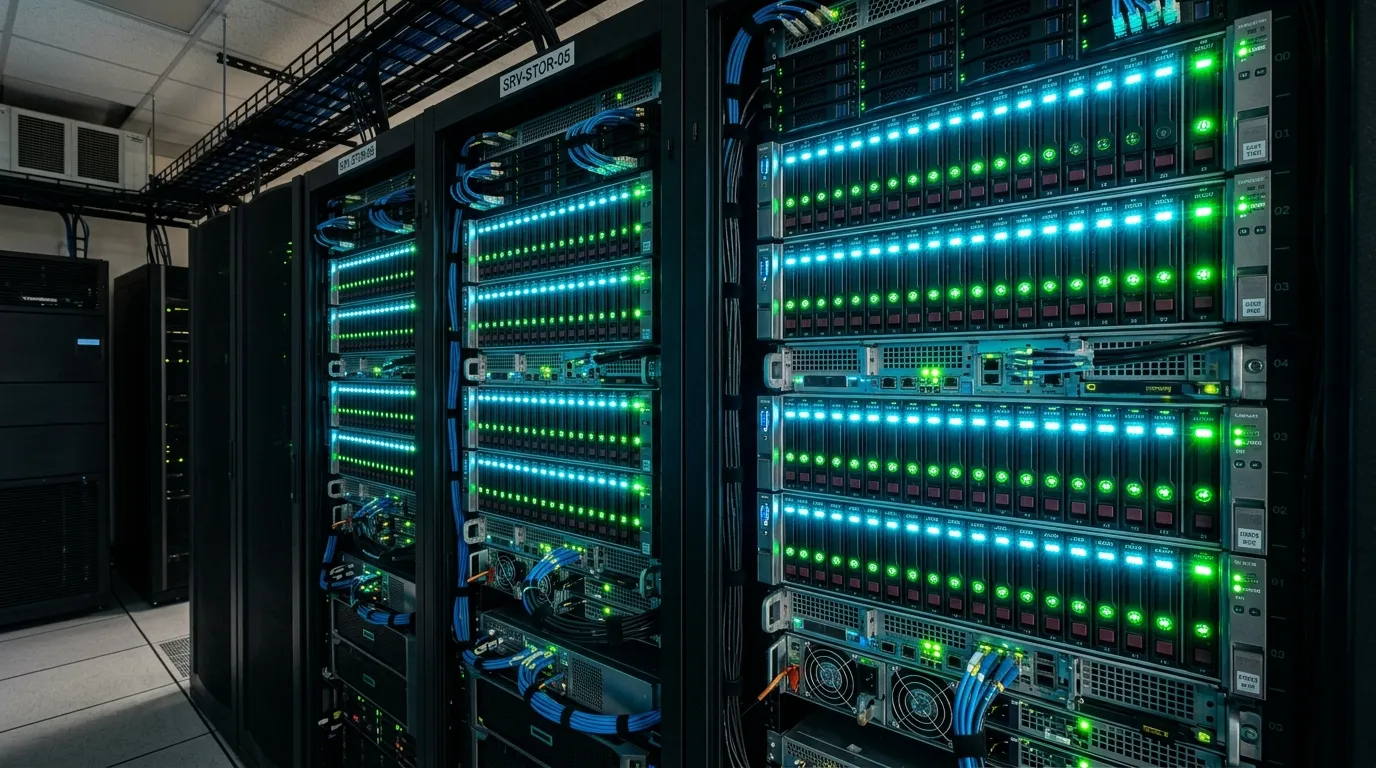
Training large models requires GPUs in volumes that most organizations cannot justify owning. Distributed compute markets — Akash, Gensyn, and similar networks — try to match hardware supply with AI workloads the way cloud providers match virtual machines with demand. The pitch is simple: idle GPUs in data centers around the world become a cheaper, more open alternative to centralized clouds.
The difficult work is not issuing a token. It is reliability, confidentiality, latency, verification, and support:
- Reliability — training runs for weeks and a single machine drop can waste the whole run, so providers must be checkable and compensable.
- Confidentiality — model weights and training data are trade secrets; renting someone else’s GPU means trusting their memory isolation.
- Verification — buyers need cryptographic proof that the compute actually ran, not just an invoice.
DePIN projects such as Grass approach the same problem from the data side — collecting and labeling the web data models are trained on — while compute networks rent the hardware. Both depend on the same credibility test: can the network prove, in a way a skeptical buyer accepts, that the resource was really delivered?
Provenance and trust
An immutable record can show that a record was written at a time. It cannot prove the underlying input was accurate. This distinction is the source of most overstated AI-provenance claims. Recording “model X was called here” on-chain is easy and useful; proving “the answer is correct and the data was clean” is a different problem entirely.
What provenance gives you, honestly:
- A tamper-evident log of which model, version, and prompt produced an output.
- An audit trail for regulators and auditors who need to reconstruct how a decision was made.
- A timestamped record that lets you detect retroactive edits.
What it does not give you:
- A guarantee the model was not already compromised before the call.
- A guarantee the training data was licensed or accurate.
- Any proof about the quality of the output itself.
Verification: the hard technical core
The genuinely interesting research is in proving what a model did. Three approaches dominate:
- Zero-knowledge proofs (ZK) — prove that a computation was performed correctly without revealing the inputs or the model. ZK for general AI inference is still slow and expensive.
- Attestation and trusted hardware — TEEs such as Intel SGX and AMD SEV provide a signed statement that code ran in a protected enclave. Practical today, but the trust moves to the chip vendor.
- Sampling and challenge protocols — economic games where anyone can re-run a checkpoint and penalize wrong answers. Cheap to check, assumes honest majority.
The table below is a fair summary of what each approach trades:
| Approach | What it proves | Cost | Main weakness |
|---|---|---|---|
| Zero-knowledge proofs | Computation correctness | Very high today | Slow for large models |
| Trusted hardware (TEEs) | Code ran in a protected enclave | Low per run | Trust moves to the chip vendor |
| Challenge games | Any participant can re-check | Low | Assumes an honest majority |
For now, the honest answer is that no deployed system verifies AI inference end-to-end. Treat any claim that it does as a research milestone, not a product feature.
Incentives: tokens as coordination, not magic
The least technical and most oversold part of the stack is the token. Tokens are genuinely useful for coordination — paying providers, rewarding validators, and aligning the people who maintain a network. Bittensor-style subnets show one model: markets where teams compete to provide good machine intelligence and are paid for it. The same pattern appears across DePIN, which we cover in depth in our research guide.
The problem is when the token becomes the entire product. A token does not improve model quality, does not guarantee demand, and does not replace engineering. The market tends to price tokens long before the underlying network delivers value — and the value only shows up when real workloads run.
Token-coordinated compute pros
- Global supply of underused hardware becomes addressable
- Open markets create price pressure against incumbents
- Cryptographic settlement removes the billing middleman
Token-coordinated compute cons
- Token price often decouples from actual workload
- Reliability and support lag centralized clouds
- Verification of real AI work is unsolved
What would make these real?
Every serious AI-crypto project should be able to answer four questions. If they cannot, the product is a slogan:
- What user problem is solved? — cheaper GPUs, auditable models, or verifiable data — not “decentralized AI.”
- What trust assumption is removed? — which party stops needing to be trusted, and what replaces them?
- What information becomes public? — provenance logs, proofs, or model weights, and what does that expose?
- What happens if the incentives change? — can the network survive a token crash, or does the whole system run on token price?

FAQ
- Is "decentralized AI" a real thing or a buzzword?
- Both. Distributed compute markets, provenance logs, and token-incentivized data networks are real and running. What is mostly marketing is the claim that a ledger makes the AI itself better — that is a compute and verification problem, not a ledger problem.
- Can a blockchain verify that an AI model was trained correctly?
- Not in general today. Zero-knowledge proofs for inference exist in research form but are too slow for large models, and proof-of-work-style verification does not carry over to ML workloads. Attestations from trusted hardware are the closest practical option.
- What is the difference between DePIN compute and normal cloud computing?
- DePIN matches distributed hardware supply with workloads through an open marketplace and token incentives, instead of one provider operating its own data centers. You get more choices and price pressure, but less of the reliability and support guarantees a cloud offers.
- Should I buy tokens of AI-crypto projects?
- That is an investment decision, not an infrastructure one. The technical question is whether the network has real workloads; the token price frequently trades far ahead of actual demand. Apply the same research process you would to any crypto project.
- What does NIST have to do with AI and crypto?
- The NIST AI Risk Management Framework is a voluntary governance reference for building trustworthy AI systems. Crypto projects use it as a vocabulary for credibility: documenting model provenance, logging decisions, and managing data quality are all framework concerns that a ledger can support but not substitute.
Bottom line
AI and crypto are both real, and they overlap in genuinely useful ways: distributed compute markets, tamper-evident provenance logs, and token incentives that coordinate hardware and data providers. The gap is between infrastructure and slogan. Ask what problem is solved, what trust assumption is removed, and what real workloads exist. For the next layer of this stack, see our web3 infrastructure explainer, the DePIN research guide, and the beginner’s guide to running nodes if you want to participate rather than just observe.
This article is for educational purposes only and should not be considered financial or investment advice. Always conduct your own research (DYOR) before investing in cryptocurrencies or blockchain projects.