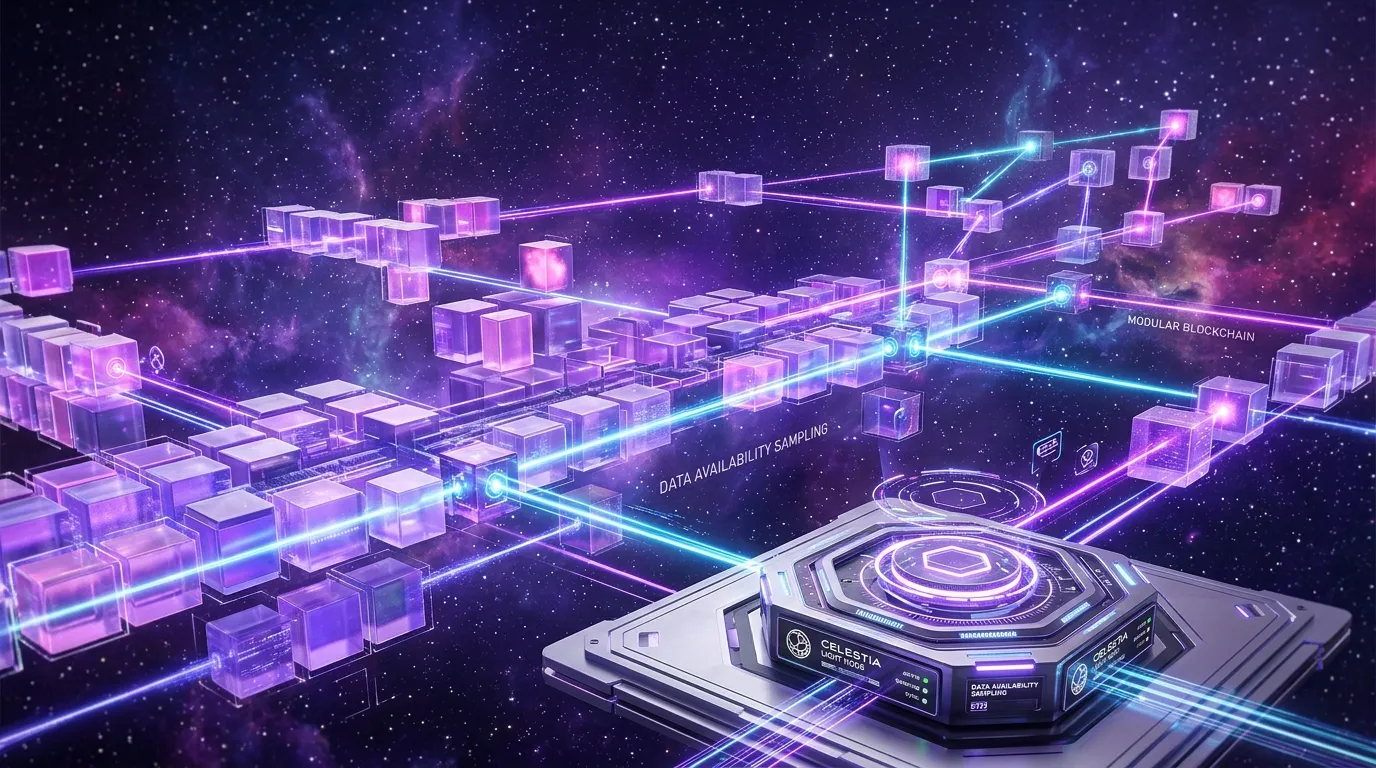
Celestia Light Node Guide: Run Data Availability Sampling (DAS) Nodes
Learn how to deploy and operate a Celestia light node: configure Data Availability Sampling (DAS), verify 2D Reed-Solomon shares, and support modular rollups.
The research archive
Guides and analysis designed to help you ask better questions about Web3 infrastructure.
Learn how to deploy and operate a Celestia light node: configure Data Availability Sampling (DAS), verify 2D Reed-Solomon shares, and support modular rollups.
Master Berachain validator operations: deploy BeaconKit modular EVM clients, manage CometBFT consensus, route BGT liquidity emissions, and maximize PoL yield.
Master Sui node operations: configure Mysticeti DAG consensus, optimize RocksDB state storage for Move objects, and deploy high-throughput validator clusters.
Complete guide to operating Render Network GPU nodes: configure OctaneBench performance tiers, setup RNP client pipelines, and monetize decentralized 3D rendering.
Master Ritual Infernet node deployment: run decentralized AI inference containers, connect smart contracts to off-chain ML models, and prove compute on-chain.
Learn how EigenLayer Actively Validated Service (AVS) operators run validation nodes, manage restaked ETH collateral, mitigate slashing risks, and earn dual yield.
Deep dive into Monad node infrastructure: 10,000 TPS parallel EVM execution, MonadBFT consensus, MonadDb SSD optimizations, and hardware requirements for operators.
Master io.net GPU Worker node setup: hardware requirements, Docker configuration, Proof of Compute benchmarks, and clustering GPUs for decentralized AI workloads.
Maximize your DePIN airdrop eligibility: step-by-step node farming strategies, residential uptime optimization, anti-sybil hygiene, and risk management.
Explore Bittensor's subnet architecture, Yuma Consensus, miner scoring mechanisms, validator evaluation pipelines, and hardware requirements for running TAO nodes.
Learn how Filecoin storage nodes work, from Proof of Replication (PoRep) to sealing pipelines, hardware requirements, collateral staking, and retrieval latency.
Understand how JSON-RPC nodes connect wallets and dApps to blockchains, the privacy risks of default public endpoints, and how to run your own private RPC.