Crypto Infrastructure
RPC Nodes Explained: The Critical Gateway Between Wallets and Blockchains
Understand how JSON-RPC nodes connect wallets and dApps to blockchains, the privacy risks of default public endpoints, and how to run your own private RPC.
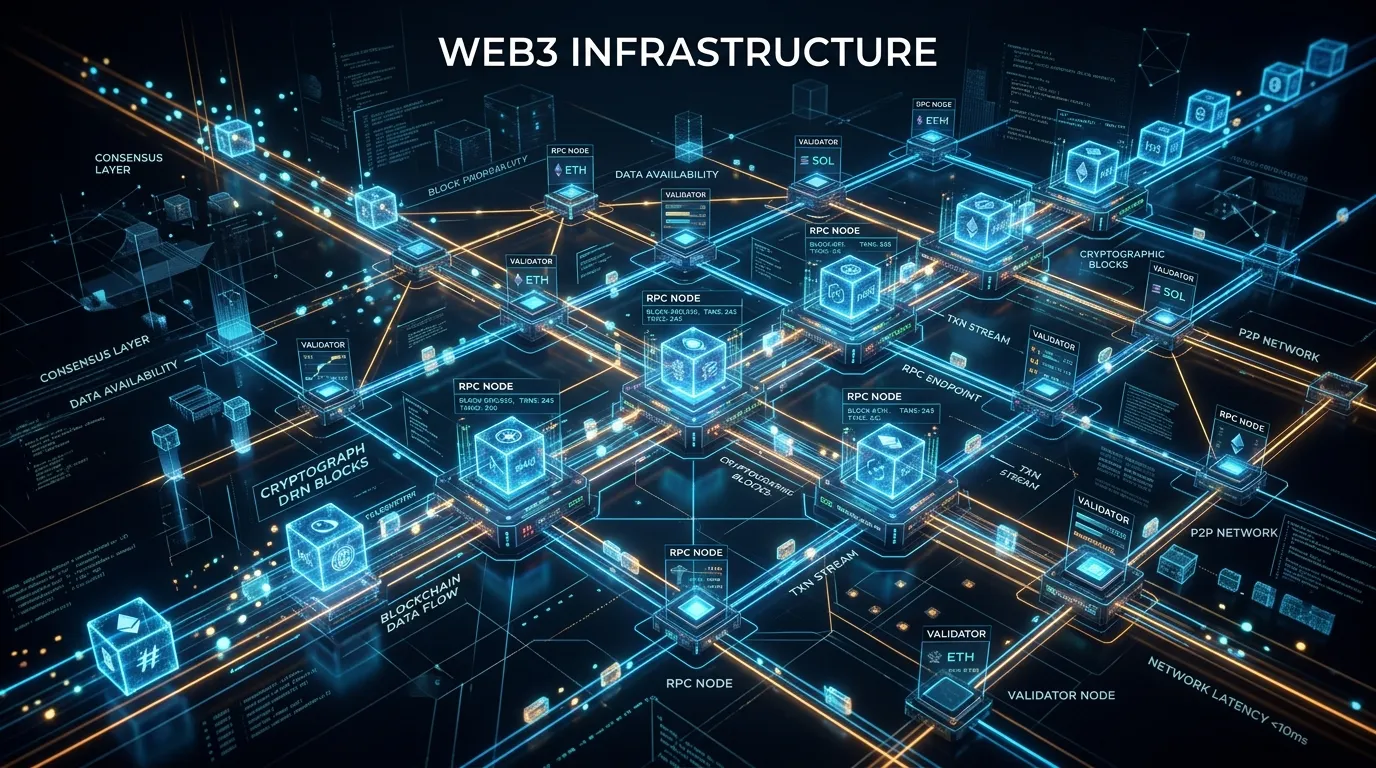
Every time you open MetaMask, approve a token swap on a decentralized exchange (DEX), check an account balance, or mint an NFT, your computer does not download the entire blockchain ledger. Instead, your client device communicates with a specialized intermediary known as a Remote Procedure Call (RPC) Node.
RPC nodes are the unsung communication backbone of Web3. They translate standard internet protocols into cryptographic blockchain queries and broadcast signed transactions directly into validator mempools. However, relying on default public RPC providers introduces significant security, privacy, and censorship risks. This guide explores the architecture of blockchain RPC nodes, uncovers the hidden risks of centralized endpoints, and explains how you can reclaim data sovereignty by running or routing through private infrastructure.
For a comprehensive foundation on securing your everyday Web3 setup, read our wallet security guide and review our beginner’s guide to running nodes.
How JSON-RPC Endpoints Function
Blockchains communicate internally using peer-to-peer gossip protocols (such as DevP2P or LibP2P). Because web browsers and mobile apps cannot natively maintain thousands of live peer connections, clients use JSON-RPC (JavaScript Object Notation Remote Procedure Call) over standard HTTPS and WebSockets.
An RPC node acts as a translator:
- Read Requests (
eth_call,eth_getBalance): When your wallet checks your token holdings, it sends an HTTP POST request to an RPC endpoint. The RPC node inspects its local copy of the blockchain state trie and returns the requested data in milliseconds. - Write Requests (
eth_sendRawTransaction): When you confirm a transaction, your private key signs the transaction locally inside your wallet. The signed payload is dispatched to the RPC node, which validates the cryptographic signature, checks nonces, and broadcasts the transaction across the peer-to-peer network into the mempool. - Event Streaming (
eth_subscribe): For live updates (such as price feeds or order book changes), clients maintain persistent WebSocket connections with RPC nodes to stream logs and newly confirmed blocks in real time.
Comparing Node Architectures: Full vs. Archive vs. RPC Relays
Not all blockchain nodes perform the same functional roles. Understanding the taxonomy is critical when designing infrastructure:
| Node Type | State Retention | Disk Space (Ethereum) | Primary Use Case |
|---|---|---|---|
| Full Node | Recent state history (~128 blocks) + block headers | ~1.5 TB – 2 TB SSD | Validating blocks, participating in consensus, basic RPC |
| Archive Node | Complete historical state from genesis block | 14 TB – 18 TB NVMe | Block explorers, analytics platforms, deep historical queries |
| Light Client | Block headers only; verifies proofs via peer nodes | < 500 MB | Mobile devices, embedded hardware, minimal verification |
| Decentralized RPC (DePIN) | Dynamic routing across thousands of distributed node runners | Variable per provider | High-availability, privacy-first dApp and wallet routing |
The Hidden Vulnerabilities of Centralized RPCs
While centralized commercial RPCs provide ultra-fast response times and high rate limits, they introduce structural vulnerabilities into the decentralized ecosystem:
- IP and Address Clustering: Centralized providers log query metadata. If legal subpoenas or corporate breaches occur, your complete transaction history can be deanonymized and tied to your physical internet identity.
- Maximal Extractable Value (MEV) Exposure: Public RPC endpoints forward transactions to public mempools, exposing your trades to front-running bots, sandwich attacks, and predatory arbitrage before miners or validators include them in a block.
- Censorship and Geo-blocking: Centralized infrastructure providers have historically blocked access to decentralized protocols for users located in specific geographical jurisdictions or interacting with sanctioned smart contract addresses.
- Single Point of Outage: In several documented incidents, major cloud outages affecting leading RPC providers temporarily rendered millions of consumer wallets unable to view balances or submit transactions across entire networks.
Practical Steps to Protect Your RPC Layer
You do not need to operate a multi-terabyte enterprise server to improve your RPC resilience and privacy. Consider these practical upgrades:
- Configure Privacy-Preserving RPCs: Replace default endpoints in your wallet settings with privacy-focused alternatives that pledge never to store IP addresses or link metadata.
- Use MEV-Blocker Endpoints: When executing high-value swaps on decentralized exchanges, route transactions through private relays to prevent front-running.
- Deploy a Decentralized DePIN RPC (Pocket Network / Lava): Decentralized RPC networks distribute queries across thousands of independent node runners, preventing any single entity from inspecting or throttling your traffic.
- Run a Local Full Node: For the highest level of trustless sovereignty, run a local Geth, Besu, or Reth node on home hardware (such as an Intel NUC or dedicated mini-PC) and point your wallet’s custom RPC network to
http://localhost:8545.
Private & Dedicated RPCs
- Complete IP address and transaction confidentiality
- Protection against malicious MEV sandwich attacks
- Immunity to third-party geographic and protocol censorship
- Direct, unfiltered verification of blockchain state
Trade-offs to Consider
- Running a local full node requires 2+ TB of fast NVMe storage
- Requires periodic client software updates and resyncing maintenance
- Self-hosted nodes depend on your home ISP uptime and latency
- Decentralized RPC endpoints can have slightly higher latency variability
Frequently Asked Questions
- Can an RPC node steal the crypto in my wallet?
- No. An RPC node never has access to your private keys or seed phrase. Transactions are signed cryptographically on your local device before being sent to the RPC. An untrusted RPC could theoretically feed you false state data or delay broadcasting your transaction, but it cannot forge a valid signature to steal assets.
- What is the difference between a validator and an RPC node?
- A validator node stakes capital to propose, sign, and vote on blocks within the consensus protocol. An RPC node focuses on servicing client queries (reading balances, looking up smart contract logs) and relaying transactions. While validators often run private RPC interfaces, public RPC nodes are dedicated to processing high volumes of incoming client traffic.
- How do I change the RPC endpoint in MetaMask?
- In MetaMask, navigate to Settings > Networks, select the network you wish to modify (such as Ethereum Mainnet or Arbitrum), and update the "New RPC URL" field with your preferred private or decentralized endpoint address.
- Does running my own RPC node earn rewards?
- Running a standard standalone full node for personal use does not earn native block rewards. However, if you stake and join a decentralized RPC protocol like Pocket Network, Lava, or Grove, your node can earn crypto tokens by serving verified RPC requests to application developers.
Bottom Line
RPC nodes represent the critical translation layer between human intent and cryptographic state machines. While default commercial endpoints offer out-of-the-box convenience, relying on them creates an Achilles heel for privacy and censorship resistance. By understanding how RPC calls work, switching to MEV-protected relays, or running a dedicated node, you take a major step toward genuine Web3 sovereignty.
To learn more about node setup and staking requirements, read our Solana validator hardware guide and our tutorial on how to secure your crypto wallet.
This article is for educational purposes only and should not be considered financial or investment advice. Always conduct your own research (DYOR) before investing in cryptocurrencies or configuring network software.