Decentralized Storage Nodes: How Filecoin and IPFS Preserve Web3 Data
Learn how Filecoin storage nodes work, from Proof of Replication (PoRep) to sealing pipelines, hardware requirements, collateral staking, and retrieval latency.
Topic
Blockchain node software and operations.
Learn how Filecoin storage nodes work, from Proof of Replication (PoRep) to sealing pipelines, hardware requirements, collateral staking, and retrieval latency.
Understand how JSON-RPC nodes connect wallets and dApps to blockchains, the privacy risks of default public endpoints, and how to run your own private RPC.
Discover how Akash Network creates a decentralized marketplace for cloud compute, container deployment via SDL, reverse auctions, and GPU nodes for AI workloads.
Step-by-step tutorial on solo staking an Ethereum validator: client pairs, consensus and execution sync, key generation, fee recipients, and slashing safety.
Explore the Helium DePIN ecosystem: LoRaWAN IoT coverage, 5G Mobile hotspots, Solana migration, subDAO mechanics, and Proof-of-Coverage reward dynamics.
Explore how decentralized AI compute nodes handle LLM inference and training, GPU VRAM requirements, proof of work verification, and network latency.
A practical breakdown of running a Solana validator node: RAM and NVMe hardware demands, vote transaction costs, and uptime responsibilities.
Learn what Grass says it does, how network participation works, and the safety checks to make before you install anything.
A plain-language framework for evaluating decentralized broadband projects like Dawn: infrastructure, coverage claims, costs, and participant risk.
A security-focused setup checklist for any browser-based Web3 participation service, with clear boundaries around wallets and permissions.
Compare light clients, full nodes, and validators through cost, hardware, security, and operational responsibility — not promised returns.
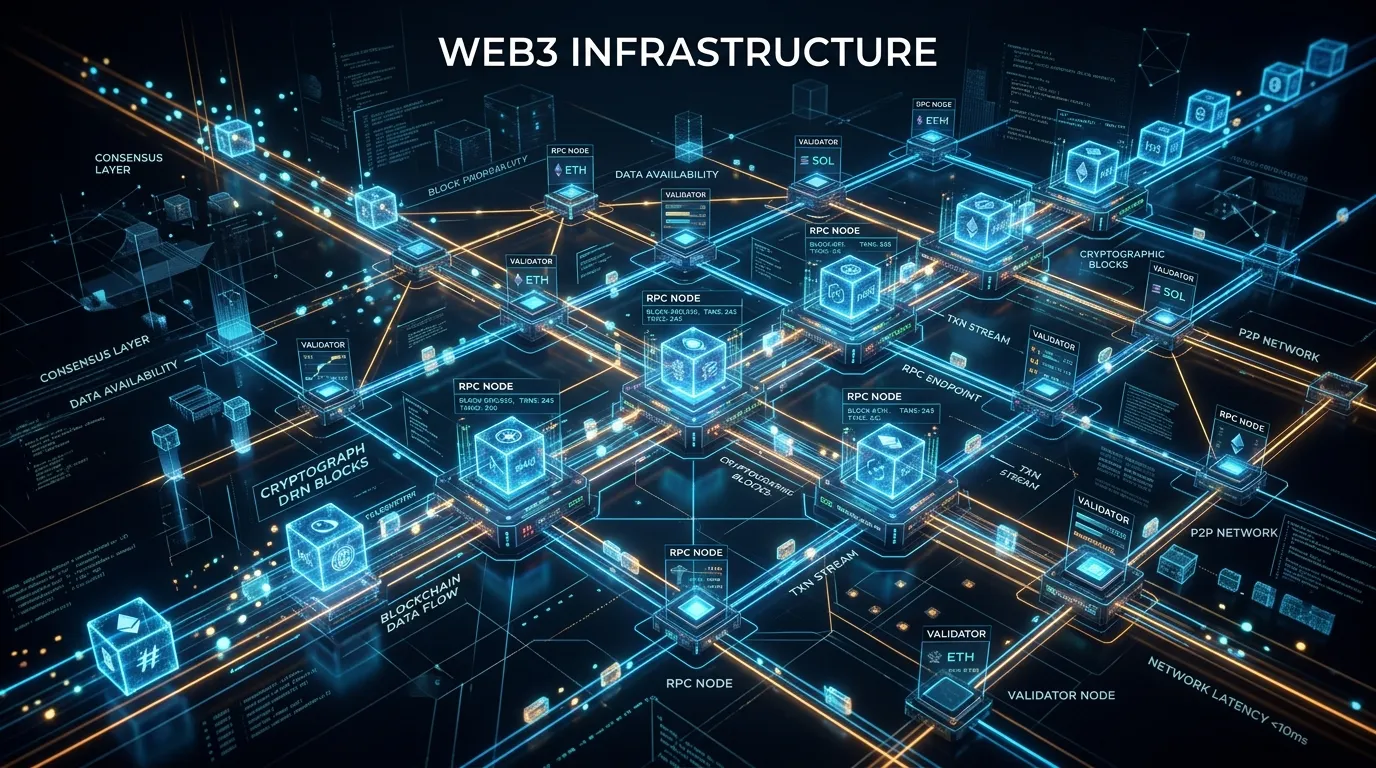
Nodes, validators, RPC providers, indexers, bridges, and wallets explained in one practical map of modern blockchain infrastructure.
How to run a blockchain node responsibly: full, light, and archive nodes, Ethereum and Bitcoin hardware needs, secure host setup, syncing, monitoring, and maintenance.